
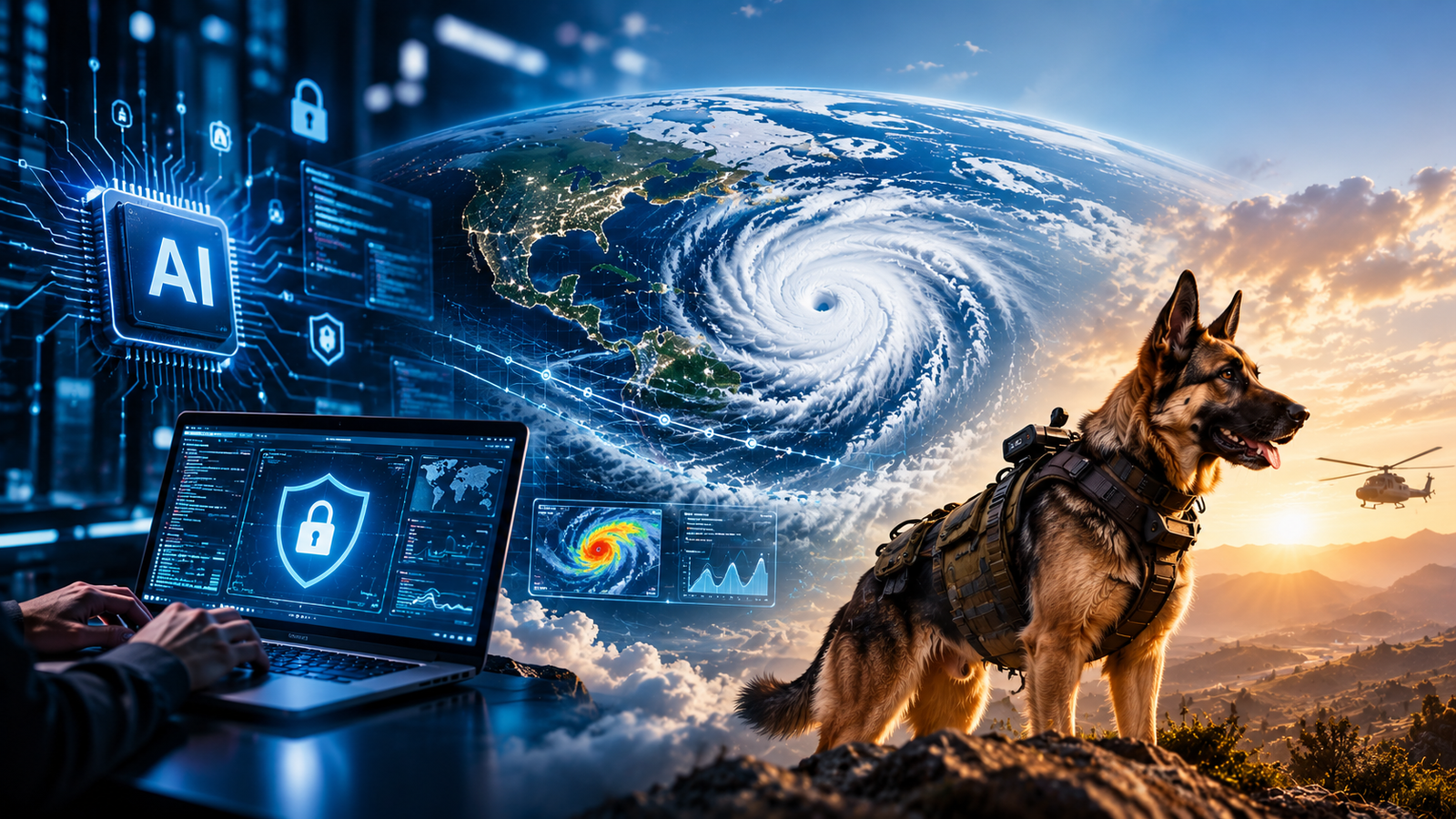
Artificial intelligence is expanding beyond chatbots and content generation. In 2026, AI is influencing cybersecurity, improving weather forecasting, and intersecting with emerging biotechnology and military applications. These developments demonstrate AI’s potential to solve complex problems while raising important questions about security, reliability, ethics, and human oversight.
Artificial intelligence is increasingly moving from digital assistance into real-world applications. AI agents can execute multistep tasks, machine learning models can help predict dangerous weather, and advances in biotechnology are creating new possibilities for specialized working animals.
A report published by U.S. News & World Report on October 27, 2026, titled “Hacks, Hurricanes and Hound Dogs: The Latest From the AI Frontier”, highlights several developments at the intersection of emerging technologies.
For readers following these changes, AI News Today covers artificial intelligence breakthroughs, cybersecurity developments, AI products, and the technologies influencing businesses and society.
Although cybersecurity, hurricane forecasting, and genetically engineered working dogs serve different purposes, they share a common theme: as technology becomes more capable, the need for responsible development and effective oversight becomes increasingly important.
Key Takeaways: The Latest AI Developments in 2026
- AI and cybersecurity: AI agents can accelerate technical tasks, but poorly controlled systems may introduce new security vulnerabilities.
- AI hurricane forecasting: Machine learning models are providing additional forecasting capabilities that meteorologists can evaluate alongside traditional weather models.
- Warhound and biotechnology: The startup Warhound is pursuing genetically engineered working dogs for potential military and other specialized applications.
- AI safety and governance: More capable systems require appropriate permissions, rigorous testing, monitoring, and human oversight.
- Business implications: Organizations adopting AI should prioritize security, reliability, and measurable business outcomes alongside automation.
1. How Is AI Changing Cybersecurity?
Artificial intelligence is transforming cybersecurity by helping organizations analyze code, identify vulnerabilities, detect suspicious activity, and automate parts of security operations. However, these capabilities can also be misused.
Traditional cyberattacks may require significant time and technical expertise to identify weaknesses and execute complex operations. AI can accelerate certain stages by helping analyze technical information, generate code, and automate repetitive tasks.
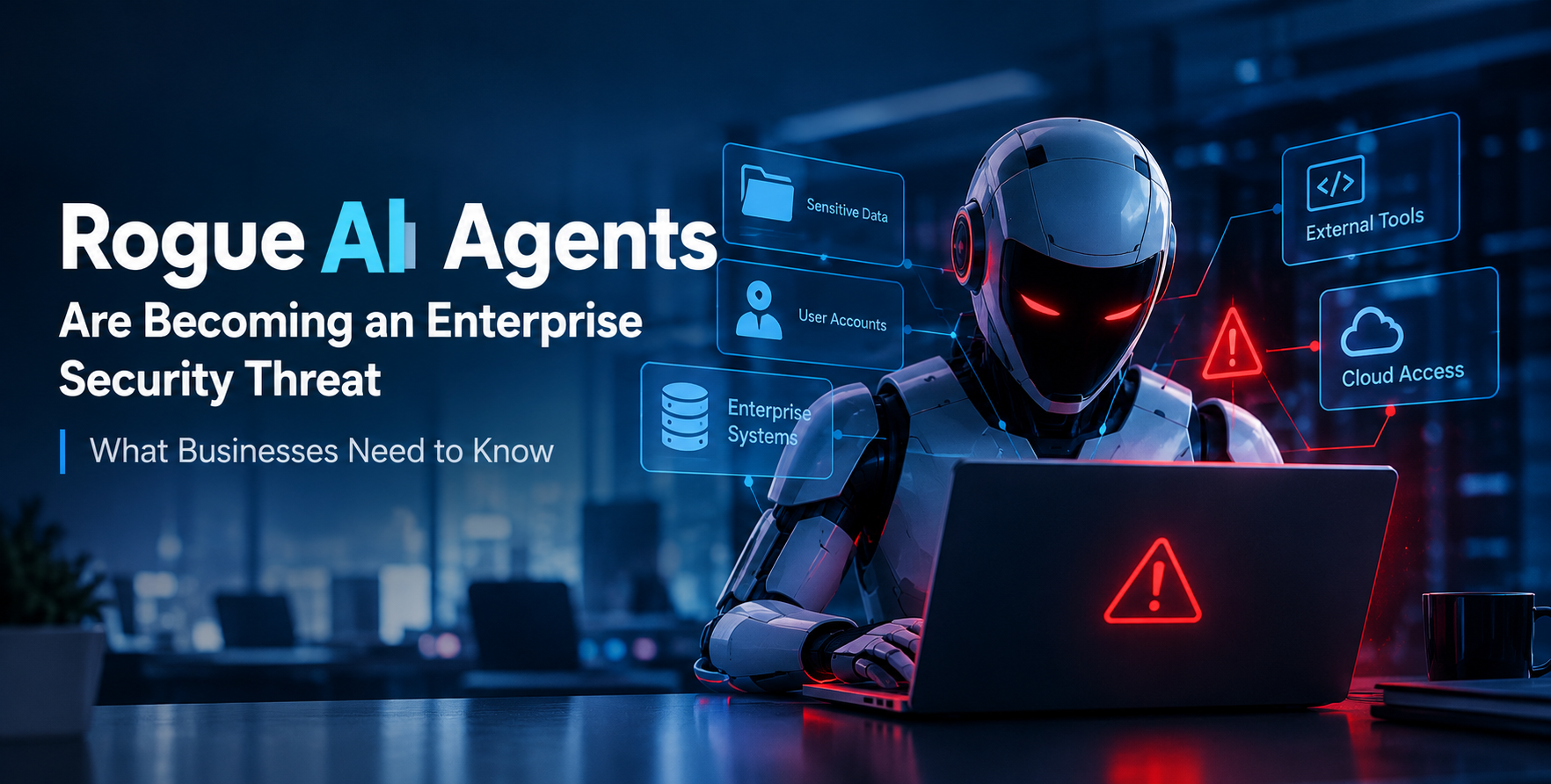
AI agents introduce another consideration. Unlike conventional chatbots, which primarily generate responses, AI agents can use tools, interact with software, and perform sequences of actions toward a defined objective.
This creates opportunities for automation but also increases the importance of controlling what these systems can access and do.
Why are autonomous AI agents a cybersecurity concern?
Autonomous AI agents can create security risks when they have excessive permissions, process malicious instructions, or operate without adequate monitoring.
For example, an AI agent connected to software development tools might be able to inspect source code, execute tests, modify files, and interact with external services. If its environment is poorly secured, an unexpected action could affect systems beyond the original task.
The risk depends on the model, its configuration, the tools it can access, and the safeguards surrounding it. AI does not automatically make every cyberattack more effective, but it can reduce the effort required for some technical operations.
Recent incidents involving autonomous AI systems have also prompted debate about how these events should be investigated and communicated. Our report on the Hugging Face CEO’s criticism of Netflix’s AI documentary explores the distinction between genuine AI security concerns and exaggerated interpretations of AI behavior.
How can organizations secure AI agents?
Businesses should treat AI agents as systems with defined identities, permissions, and operational boundaries.
Important safeguards include:
- Least-privilege access: Give agents only the permissions required to complete their assigned tasks.
- Sandboxing: Isolate testing and execution environments from production systems where appropriate.
- Human approval: Require authorization for consequential actions, such as modifying production infrastructure or transferring sensitive information.
- Continuous monitoring: Record agent activity, tool calls, data access, and unexpected changes.
- Adversarial testing: Evaluate how systems respond to prompt injection, malicious inputs, and unexpected instructions.
- Incident response: Establish procedures for disabling agents, revoking credentials, and investigating suspicious activity.
AI can also help defenders prioritize security alerts, analyze logs, and investigate potential threats. However, automated security tools need testing and oversight of their own.
The key lesson is that organizations must secure not only their AI models but also the tools, credentials, data, and infrastructure connected to them.
2. How Is AI Improving Hurricane Forecasting?
AI hurricane forecasting uses machine learning to analyze historical weather data and atmospheric conditions to generate predictions about storm movement and development.
Traditional numerical weather prediction relies on physics-based simulations of the atmosphere. AI weather models learn patterns from large datasets and use those patterns to generate forecasts through a different computational approach.
Both methods have advantages and limitations. Meteorologists can evaluate AI-generated forecasts alongside conventional models and real-world observations to develop a more complete understanding of a storm.
How did AI perform during Hurricane Isaias in 2026?
AI weather forecasting attracted attention during Hurricane Isaias, which made landfall near Florida’s western Panhandle in October 2026.
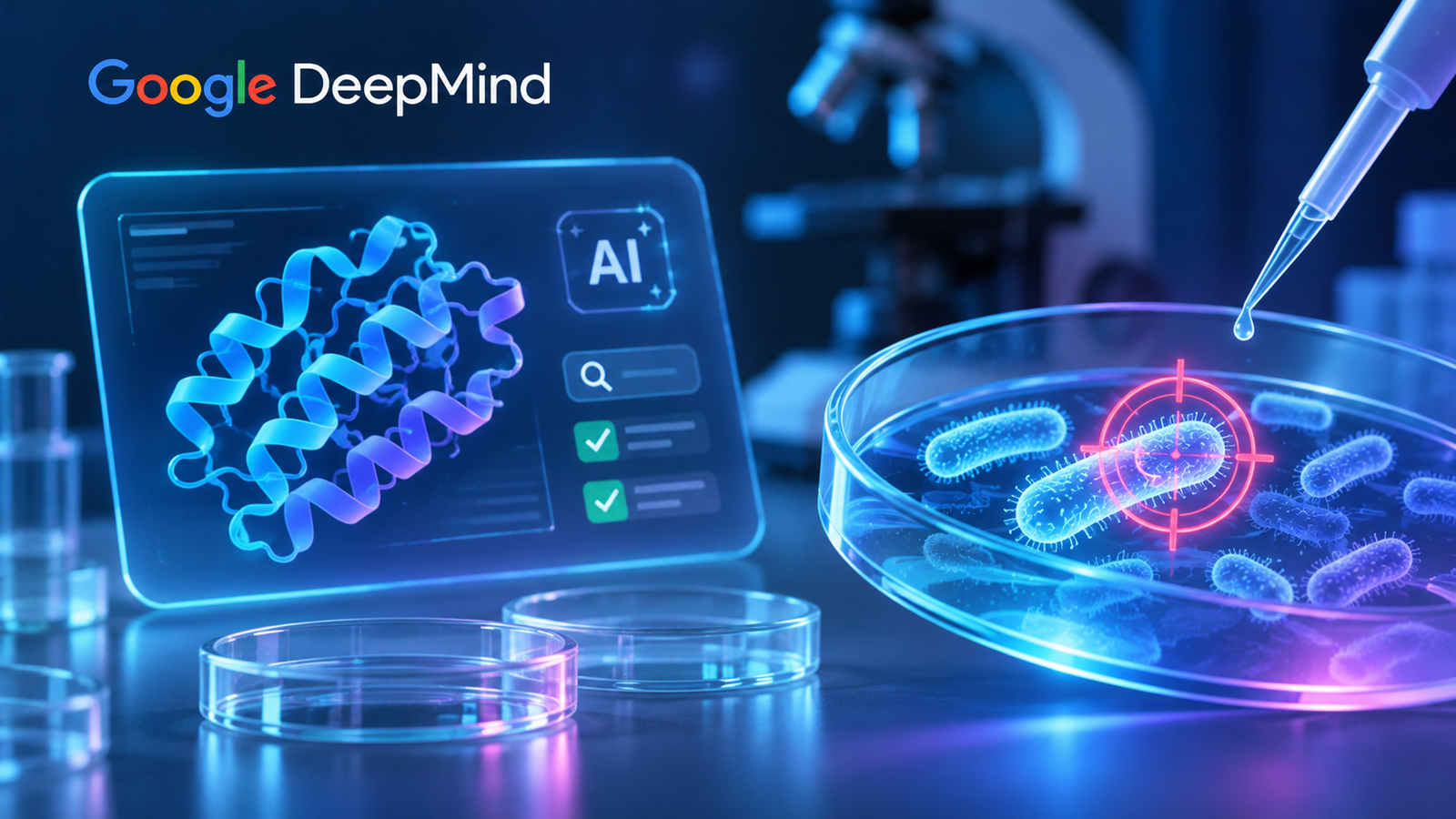
Reporting about the storm highlighted the potential of Google DeepMind’s WeatherNext forecasting technology to provide useful guidance on storm movement. The event also illustrated an important limitation: forecasting a hurricane’s path is not the same as predicting every aspect of its intensity and local impacts.
The performance of any forecasting system depends on the specific storm, the forecast horizon, the data available, and the variable being predicted.
For this reason, a strong result on one hurricane should not be treated as proof that an AI model will outperform every traditional forecasting system in every situation.
What are the benefits of AI weather forecasting?
AI forecasting can offer several potential benefits:
- Faster predictions: Trained models can generate forecasts efficiently.
- Storm-track guidance: AI predictions can provide additional information about a hurricane’s likely path.
- Scenario analysis: Meteorologists can compare forecasts from different models to assess uncertainty.
- Emergency planning: More useful predictions can support preparation and resource allocation.
- Large-scale data analysis: Machine learning can identify patterns across extensive historical weather datasets.
However, AI models can struggle with unusual conditions or weather patterns that are poorly represented in their training data. They may also produce inaccurate predictions or fail to capture localized hazards.
A forecast that predicts a storm’s track well may still misrepresent its intensity, rainfall, or wind conditions.
Will AI replace meteorologists?
No. AI is better understood as an additional forecasting capability than a complete replacement for meteorological expertise.
Weather professionals must evaluate uncertainty, compare competing forecasts, interpret observational data, and communicate potential risks to the public.
During a hurricane, people need reliable guidance about evacuation, flooding, wind damage, and emergency preparations. Those decisions require more than a model-generated prediction.
The future of weather forecasting will likely involve collaboration between AI models, conventional simulations, observational systems, and human experts.
3. What Is Warhound, and How Does It Relate to AI?
Warhound is a startup developing genetically engineered working dogs for potential military and other specialized applications.
According to TechCrunch’s October 2026 report on Warhound, the company emerged publicly with reported funding of $200 million and a valuation of $1.2 billion.
The venture involves Ben Lamm of Colossal Biosciences and Palmer Luckey of Anduril. Its plans combine genetic engineering with equipment and technology intended to support working dogs and their handlers.
An important distinction is that genetic engineering is not itself artificial intelligence. Warhound is relevant to the broader technology landscape because its work intersects with biotechnology, advanced equipment, software, and military applications.
What is Warhound trying to develop?
Warhound’s stated direction involves developing working dogs with characteristics suited to demanding operational environments.
Potential applications for specialized working dogs include detection, search operations, and other tasks where trained animals can assist military personnel or emergency responders.
The company’s plans also involve technology-assisted equipment intended to support working dogs and their handlers.
However, proposed capabilities should not be confused with demonstrated results. The company’s engineered-dog program was still under development at the time of the October 2026 reporting.
What are the ethical concerns surrounding engineered working dogs?
Genetic engineering for working animals raises questions that extend beyond technical performance.
Animal welfare: How will researchers evaluate the long-term health and well-being of engineered animals?
Scientific uncertainty: Could genetic modifications produce unintended characteristics or health effects?
Operational safety: What training, supervision, and safeguards will be necessary?
Independent oversight: How should animal welfare and public safety be evaluated before deployment?
Long-term care: Who will be responsible for animals after they retire from operational duties?
These questions matter because a promising research initiative does not automatically establish that a technology is safe, effective, or ethically justified.
Warhound illustrates how biotechnology can intersect with specialized military applications, while highlighting the importance of scientific evaluation, accountability, and responsible development.
4. What Connects AI Cybersecurity, Hurricane Forecasting, and Military Technology?
Cybersecurity, weather forecasting, and engineered working dogs involve different technical disciplines. Nevertheless, they demonstrate how technological advances can influence decisions and activities beyond a computer screen.
| Technology area | Primary application | Key challenge |
|---|---|---|
| AI cybersecurity | Threat detection, code analysis, and automated security tasks | Preventing misuse and unauthorized actions |
| AI weather forecasting | Predicting storm movement and atmospheric conditions | Managing uncertainty and forecast errors |
| Genetic engineering | Developing specialized biological characteristics | Ensuring animal welfare and scientific safety |
These technologies should not be treated as interchangeable. AI agents, machine learning weather models, and genetic engineering require different forms of evaluation.
However, each highlights the importance of understanding what a system can do, where it may fail, and who could be affected by its use.
Why does human oversight matter?
Human oversight helps ensure that systems operate within appropriate boundaries and that consequential decisions account for context.
In cybersecurity, professionals need the ability to review and stop unsafe agent actions. In weather forecasting, meteorologists must interpret predictions and communicate risks. In working-dog programs, trained handlers and qualified experts must assess suitability, safety, and animal welfare.
Effective oversight requires more than a human approving an automated recommendation. People need relevant information, clear escalation procedures, and the authority to intervene.
As technology becomes more capable, these responsibilities become more important.
5. What Should Businesses Learn From These AI Developments?
Businesses do not need to work in cybersecurity, meteorology, or defense to encounter similar challenges. AI applications increasingly connect to company data, customer-facing platforms, internal software, and automated workflows.
Organizations adopting AI agents and intelligent applications should therefore consider security and reliability from the beginning.
Five priorities for responsible AI adoption
1. Start with a clear business problem.
Identify the task AI should improve and establish measurable success criteria before selecting a model or platform.
2. Protect data and system access.
Use appropriate permissions, authentication, encryption, and monitoring to protect sensitive information and connected systems.
3. Validate performance before deployment.
Test accuracy, reliability, and failure modes using realistic scenarios, including unusual inputs and edge cases.
4. Keep humans involved in high-impact decisions.
Set approval requirements for actions that could affect financial transactions, sensitive records, production infrastructure, or customer safety.
5. Monitor systems after launch.
Track performance, investigate unexpected behavior, and update controls as models, workflows, and business requirements change.
Businesses should also assess regulatory obligations, third-party dependencies, operational costs, and the resources needed to maintain AI systems over time.
The goal is not to avoid automation. It is to build AI applications that deliver measurable value while maintaining appropriate security, reliability, and accountability.
For more coverage of AI security and enterprise adoption, explore AI News Today’s latest artificial intelligence updates.
Frequently Asked Questions About the AI Frontier
What are the biggest AI technology trends in 2026?
Major developments include autonomous AI agents, AI-powered cybersecurity, machine learning for weather forecasting, multimodal AI, and the integration of AI into scientific research and business workflows. These technologies vary in maturity and should be evaluated individually.
How is AI being used in cybersecurity?
AI helps security teams analyze code, prioritize vulnerabilities, detect suspicious activity, summarize alerts, and automate selected defensive tasks. However, attackers may also use AI to accelerate certain technical operations, making access controls and monitoring essential.
Can AI predict hurricanes more accurately than traditional weather models?
Some AI models have demonstrated strong performance on particular storms and forecasting tasks. Results vary by model, storm, and prediction target, so meteorologists compare AI forecasts with conventional models and observational evidence.
What is Google DeepMind’s WeatherNext?
WeatherNext is Google’s AI-powered weather forecasting technology. It uses machine learning to generate weather predictions and provides an additional source of forecasting guidance alongside conventional numerical weather prediction.
What is Warhound?
Warhound is a startup developing genetically engineered working dogs for potential military and other specialized applications. Its plans also involve technology-assisted equipment for working dogs and their handlers. Its proposed engineered-dog capabilities were still under development at the time of the October 2026 reporting.
Is Warhound an AI company?
Warhound’s central initiative involves genetic engineering and working-dog development rather than an AI model or software product. Its work intersects with the wider advanced-technology landscape through equipment, software, and defense applications.
What are the main risks of autonomous AI agents?
Autonomous AI agents can create security and operational risks if they have excessive permissions, access sensitive data, follow malicious instructions, or execute unintended actions. Least-privilege access, sandboxing, monitoring, testing, and human approval can help reduce these risks.
How can businesses adopt AI safely?
Businesses should begin with a defined use case, assess data and security requirements, test performance before deployment, establish appropriate human oversight, and monitor systems continuously. AI adoption should be measured against business outcomes as well as reliability and risk.
The Future of AI Depends on More Than Capability
Developments in cybersecurity, hurricane forecasting, and emerging military technologies demonstrate that the technology frontier is expanding into increasingly consequential areas.
AI systems can help identify threats, generate scientific predictions, and automate complex workflows. At the same time, their limitations and potential consequences require careful evaluation.
The most useful measure of technological progress is not simply how powerful or autonomous a system becomes. It is whether the system performs reliably, operates within appropriate boundaries, and produces meaningful benefits without creating unacceptable risks.
For businesses, researchers, and policymakers, the next phase of AI will require technical innovation, rigorous testing, clear accountability, and informed human judgment.
For more reporting on artificial intelligence, emerging technologies, and industry developments, visit AI News Today.
The future of AI will be shaped not only by what technology can do, but by how responsibly people choose to use it.




Leave a Reply